
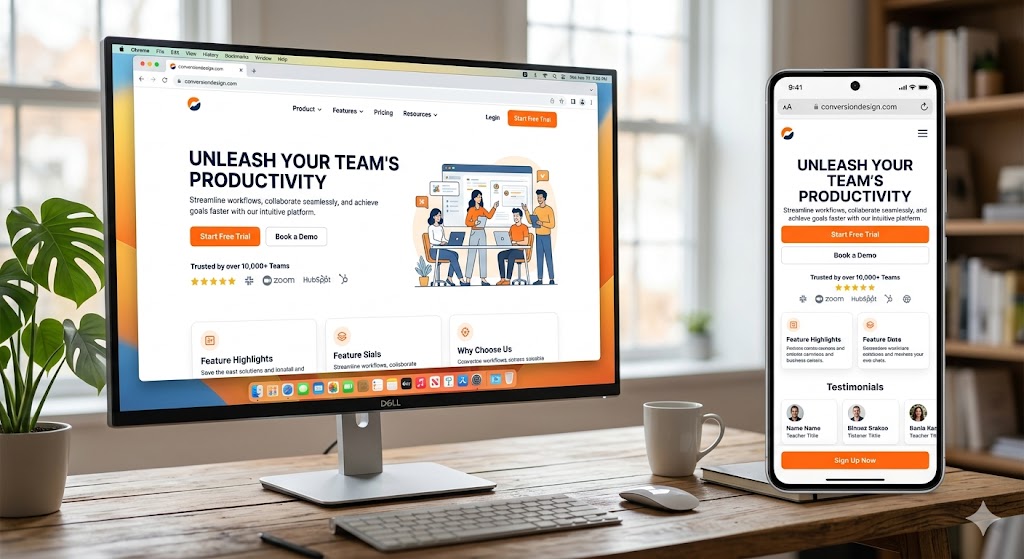
A high-converting website in 2026 focuses on clarity, speed, and guided user journeys. Design trends that improve conversion rates are not about visual appeal alone. They reduce friction, build trust quickly, and help users take action without confusion. Businesses in Columbus, NE that apply these principles often see better leads, longer sessions, and stronger ROI.
What Makes a Website Design Trend Actually Improve Conversions?
A design trend improves conversions when it helps users complete a goal faster and with less doubt. It should reduce clicks, answer questions early, and guide attention toward action points. Trends that only look modern but add complexity often hurt performance.
Real gains come from behavior-based design. That means using layout, spacing, and messaging based on how people scan and decide. In Columbus, NE, many small and mid-sized businesses see better results when their website feels easy to use rather than overly styled.
Why Simplicity Wins Over Visual Complexity in 2026?
Simple websites convert better because they reduce decision fatigue. When users see too many options, they hesitate or leave. Clean layouts with clear headings help users find what they need quickly.
This does not mean plain design. It means structured design. Each section should have a clear purpose. White space, readable fonts, and focused messaging help users move forward without distraction. Businesses that remove clutter often see immediate improvements in click-through rates.
How AI-Powered Personalization Increases Conversion Rates
AI-driven personalization shows users content based on their behavior, location, or past actions. This helps visitors feel understood, which builds trust and increases engagement. Personalized experiences often lead to higher conversions because users see what matters to them.
For example, a returning visitor may see a different headline or offer than a first-time user. In Columbus, NE, service-based businesses can use this to highlight relevant services based on user intent. The key is subtle personalization that supports the user without feeling intrusive.
What Role Does Page Speed and Performance Play in Conversions?
Page speed directly affects conversions. A delay of even one second can reduce engagement and increase bounce rates. Fast-loading pages keep users focused and reduce frustration.
Speed improvements come from image compression, clean code, and efficient hosting. Many businesses overlook this and focus only on visuals. In reality, performance is one of the strongest conversion drivers. A fast website signals reliability and professionalism.
Why Mobile-First Design Is No Longer Optional?
Most users now visit websites on mobile devices first. A mobile-first design ensures that the site works smoothly on smaller screens. This includes easy navigation, readable text, and fast load times.
Designing for mobile first also forces better prioritization. You must focus on what matters most. Businesses in Columbus, NE that shift to mobile-first layouts often see increased form submissions and call clicks.
How Micro-Interactions Guide User Behavior
Micro-interactions are small design responses like button animations, hover effects, or progress indicators. They give users feedback and make the website feel responsive.
These details may seem minor, but they guide behavior. For example, a subtle animation on a call-to-action button can draw attention without being distracting. Micro-interactions also reduce uncertainty by showing users that their actions are working.
Why Clear Call-to-Actions Improve Conversion Rates
A strong call-to-action tells users exactly what to do next. It should be visible, direct, and easy to understand. Vague phrases often confuse users and reduce conversions.
Effective CTAs use action-based language. Instead of “Learn More,” phrases like “Get Your Free Quote” or “Book a Consultation” perform better. Placement also matters. CTAs should appear where users naturally decide to act, not just at the bottom of the page.
How Does Social Proof Placement Affect Conversion Rates?
Social proof works best when placed close to decision points, not hidden on a separate page. Users are more likely to convert when they see reviews, testimonials, or ratings right before a call-to-action. This reduces hesitation and builds confidence at the exact moment they are deciding.
Strategic placement matters more than quantity. A few strong testimonials near pricing sections, forms, or service descriptions perform better than a long list buried elsewhere. In Columbus, NE, businesses that align social proof with user intent often see higher trust and faster decision-making.

How Trust Signals Influence User Decisions?
Trust signals help users feel safe before taking action. These include reviews, testimonials, certifications, and secure payment icons. When users trust a website, they are more likely to convert.
In Columbus, NE, local credibility matters. Featuring real client feedback and recognizable partnerships can make a strong impact. Trust signals should be visible but not overwhelming. The goal is to support the decision, not distract from it.
What Is the Impact of Content Hierarchy on Conversions?
Content hierarchy organizes information so users can quickly scan and understand key points. Clear headings, short paragraphs, and visual breaks make content easier to digest.
Users rarely read every word. They scan for answers. A strong hierarchy ensures they find those answers fast. This reduces bounce rates and keeps users engaged long enough to convert.
Why Interactive and Visual Content Drives Engagement?
Interactive elements like quizzes, calculators, or clickable sections increase user engagement. Visual content, such as videos and infographics, helps explain complex ideas quickly.
These tools work well because they involve the user. Instead of passively reading, users take part in the experience. This creates a stronger connection and improves conversion chances. The key is to use interactive elements with a clear purpose, not just for novelty.
How Conversion-Focused Navigation Improves User Flow?
Navigation should guide users toward key actions without confusion. Complex menus can overwhelm users and slow them down. Simple, focused navigation keeps users on track.
Limit menu items to essential pages. Use clear labels that match user intent. Sticky navigation bars can also help users access important sections without scrolling back up. A well-structured navigation system improves both usability and conversions.
Common Website Design Mistakes That Hurt Conversions
Many businesses unknowingly reduce conversions through poor design choices. These mistakes often come from focusing on trends without understanding user behavior.
Overloading pages with animations can slow down performance. Using unclear messaging can confuse users. Ignoring mobile usability can drive visitors away. Fixing these issues often leads to quick improvements in conversion rates.
How Data-Driven Design Decisions Lead to Better Results?
Design decisions should be based on real data, not assumptions. Tools like heatmaps, user recordings, and A/B testing provide insights into user behavior. This helps identify what works and what needs improvement.
Testing different layouts, headlines, and CTAs can reveal what drives conversions. Businesses in Columbus, NE that use data to guide design updates often see steady growth over time. Small changes based on data can lead to significant results.
FAQs – Website Design and Conversion Rates
What is the most important website design factor for conversions?
The most important factor is clarity. Users should understand what the website offers within seconds. Clear messaging, simple navigation, and strong CTAs work together to improve conversions.
How often should I update my website design?
A website should be reviewed every 12 to 18 months. Updates depend on performance data, user behavior, and changing trends. Small improvements can be made regularly without a full redesign.
Does website design affect SEO and rankings?
Yes, design affects SEO through page speed, mobile usability, and user experience. Search engines favor websites that load quickly and provide a smooth experience. A better design can lead to higher rankings and more traffic.
Are animations good or bad for conversions?
Animations can help when used carefully. They should guide attention and provide feedback, not distract users. Too many animations can slow down the site and reduce conversions.
How can small businesses improve conversions without a full redesign?
Small businesses can start by improving CTAs, simplifying navigation, and increasing page speed. Adding trust signals and refining content structure can also make a noticeable difference without major changes.
Conclusion
Website design trends in 2026 focus on clarity, speed, and user guidance. Businesses in Columbus, NE that apply these strategies often see stronger engagement and higher conversion rates. Each improvement should make the user journey easier and more direct.
Work with VRLY Multimedia to build a high-converting website that supports your business goals in Columbus, NE. Our team handles design, performance, and strategy so you can focus on growth while they manage your digital presence. Contact us today.